
Investors Will Focus on Jobs
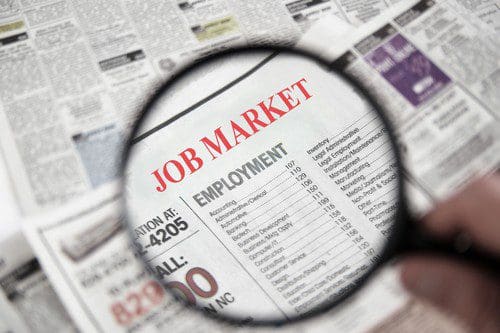
After an optimistic Fed minutes outlook last week, investors will focus on the labor market this week. The Job Openings and Labor Turnover Survey (JOLTS), ADP’s National Employment Report, and the Labor Department’s November nonfarm payrolls report will be released. The latest updates on home prices will become available with the release of the Case-Shiller National Home Price Index and Freddie Mac’s House Price Index (HPI) for September. Lastly, on Thursday, the Bureau of Economic Analysis (BEA) will release its Personal Consumption Expenditures (PCE) Price Index for October, offering an update on the inflation pressure faced by the American consumer and potentially showing a turn in consumers’ sentiment. This week’s commentary includes a reflection on the state of stable cryptocurrencies.
Dollar Surge & Fed Dilemma

The Federal Reserve’s tightening policy to fight inflation in the U.S. has had consequences that stretch past American borders. In fact, the sharp rise in interest rates has led to a substantial capital influx into dollars at the expense of other currencies, sending the USD index to the highest level in over two decades. This has happened before. As the world’s reserve currency, marked changes in the USD convenience yield impact every economy and tend to have dire effects on emerging markets in particular. While now largely forgotten, a surging U.S. dollar in 1985 forced the then-G-5 industrialized nations to intervene in the currency market and weaken the dollar substantially. Similarly, in 1997 with the Asian Currency Crisis, and in 1998 with the Russian Debt Default (and associated collapse of the hedge fund Long-Term Capital Management), a surging dollar caused a great deal of upset in the global economy that forced the Fed either to delay raising rates or cut them in ‘98 in the wake of systemic financial risks. What we are seeing today is that the Chinese Yuan Renminbi and the Taiwanese Dollar have slipped to 2019 lows. The Euro is hovering around parity after 20 years, and the Japanese Yen trades at a 24-year low against the greenback, which prompted the Bank of Japan to intervene to support its currency for the first time since 1998.
Markets Open Up
Markets opened up last Monday as investors prepared for the latest inflation data and the Midterm results. The October CPI (Consumer Price Index) came in lower than expected on Thursday, potentially signaling that the economy is finally cooling down. Markets rallied on the news, in the best trading day since April 2020. The Nasdaq alone gained over 7 percent. On Tuesday, news of crypto exchange FTX’s liquidity issues triggered a large selloff in the crypto market, with Bitcoin touching a two-year low. CEO Sam Bankman-Fried (SBF) asked for $8 billion in emergency funding to cover a shortfall due to withdrawal requests received in recent days. After days of rumors of potential acquirers and liquidity backers that never materialized, the exchange filed for chapter 11 bankruptcy on Friday, and CEO SBF resigned. Also of note last week, U.S. Mortgage rates rose to 7.14%, nearing the highest level since 2001.
Grain War is Back

On Monday, 11/4, Russia withdrew from the UN-brokered Black Sea grain initiative, an agreement on the resumption of Ukrainian grain exports via the Black Sea amid the ongoing war. The UN plan has worked effectively so far, stabilizing prices and providing food to developing countries. A prolonged trade stop would have dire consequences in emerging economies especially. Ukraine and Russia are some of the largest food exporters in the market. They are net exporters of several leading cereal crops: wheat, maize (corn), and barley. Both are also dominant exporters of sunflower oil, one of the world’s dominant vegetable oils, with Ukraine accounting for almost half of the global supply. Although this food supply-chain disruption will affect all importers, the impact will not be felt equally across the world, as emerging economies are going to be impacted the most. Some countries, such as India, rely heavily on imports of sunflower oil for domestic food supplies, and geographic areas such as North Africa and the Middle East are large wheat consumers.
Breaking Up Will Pay – CHIMERICA WAS ALWAYS AN IMPOSSIBLE DREAM
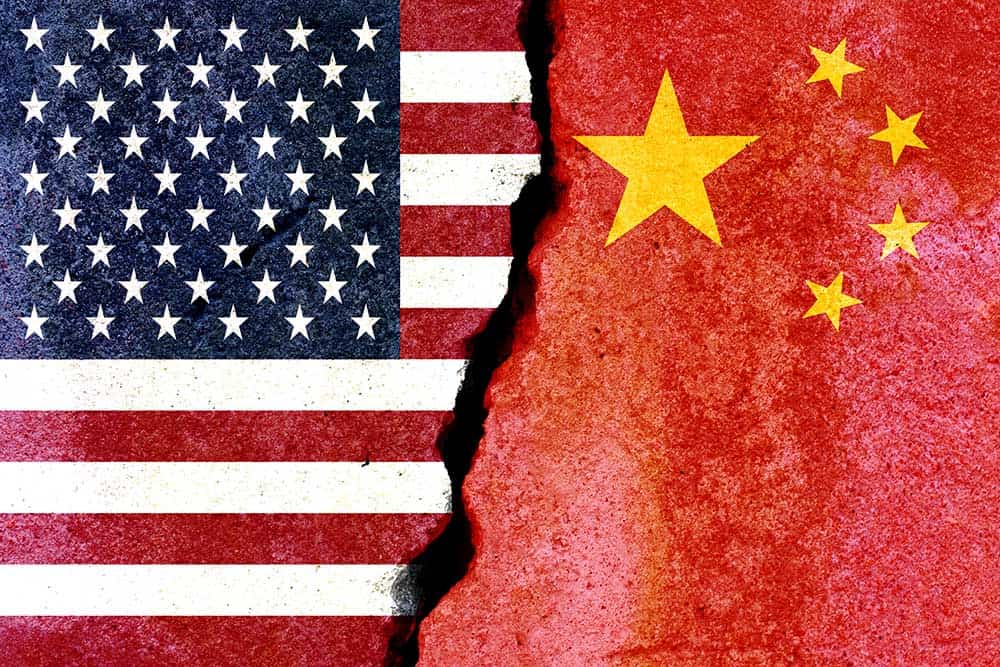
Sooner or later, reality makes itself felt. With President Richard Nixon’s Opening to China in 1972, the death of Mao, his successor Deng Xiaoping’s call for “all to get rich,” and the collapse of the Soviet Union in 1991, leaders of the free trading democracies eagerly adopted Professor Frank Fukuyama’s view that the world had […]
Positive Signs for Economy

The week opened in positive territory as investors waited for large corporations’ recent earnings. US mortgage rates topped 7% on 30-year fixed mortgages, a level not seen in 20 years. On Thursday, the release of the last GDP report showed positive signs for the US economy, which has grown 2.6% in the third quarter, beating expectations. Big tech results came in mixed, as companies that rely mostly on consumer spending reported solid trends while advertising revenue slowed down. Next week Fed officials will gather to decide their next monetary policy. An interest-rate decision is expected on Wednesday, with experts predicting a new 75-basis-point increase. A number of labor market indicators, including the latest Job Openings and Labor Turnover Survey (JOLTS), ADP’s National Employment Report, and the October nonfarm payrolls report, will provide a recent look at the strength of the economy over the week.
The Rise of the Dragon

This week marked the beginning of the National Congress of the Chinese Communist Party, arguably the most solemn and important event in Chinese politics, where changes to the top-level leadership and to the Party’s Constitution are formally announced every five years. This year’s event will be remembered in history as the first time a third consecutive mandate was handed over to a Chinese president, paving the way for Xi Jinping’s lifetime rule. Since the Mao era, China has undergone a profound transformation of its economic and social structure, bringing it closer to a Western nation than ever before. The country’s rise to a global superpower began just 40 years ago when Deng Xiaoping’s government initiated economic reforms and trade liberalization. Deng’s goal was to energize an economy that was poor, stagnant, vastly inefficient, and relatively isolated from global markets due to Mao’s faulty economic and political policies. The move has had an astonishing effect on the country, whose GDP growth averaged 9.5% a year through 2018, a pace described by the World Bank as “the fastest sustained expansion by a major economy in history.” Notably, such growth has helped raise an estimated 800 million people out of poverty.
Time for Big Mac – The Market Access Charge

Yes, it is time for the United States to adopt the Big Mac. No, it’s not the burger. It is the Market Access Charge (MAC) that former Bell South Economist John Hansen has been urging the U.S. government to adopt as a way of reducing over-valuation of the U.S. dollar, the U.S. trade deficit, and […]
Markets Swinging
This past week has seen markets swinging between negative and positive territory on news of a potentially escalating war in Ukraine, continuing talks of an incoming recession, and the largest increase in core inflation in 40 years. The core CPI (Consumer Price Index that excludes food and energy) climbed 6.6% in September, showing that inflation has spread across the economy, and supporting expectations of further Fed tightening in the November FOMC meeting. Although the market initially dropped on the news, on Thursday, it ended up closing strong. On Friday, banks posted their latest results, showing resilience even in the current economic environment. JPMorgan beat expectations, though it set aside hundreds of millions of dollars preparing for the recession that CEO Jamie Dimon has been calling for months. The week ahead will be one of the busiest corporate earnings seasons, with Bank of America, Goldman Sachs, Netflix, Tesla, and others, scheduled to report their most recent results.
Americans Held Hostage – Incorporated in America but Commanded by China

On December 2, 2015 a terrorist attack took place on a training event of the Department of Public Health at the Inland Regional Center of San Bernardino, California. Of the eighty people attending, fourteen were killed and twenty two were seriously injured. As chance would have it, the shooters dropped an iPhone which was picked […]