
Jobless Claims Fall
The U.S. labor market continues to see improvement as jobless claims fall. The Bureau of Labor Statistics will release February Job Openings and Labor Survey (JOLTS) on Tuesday. It shows the number of job openings for the month. The Fed’s preferred gauge for inflation, the PCE Price Index, will be released for February on Wednesday. It is likely to show costs of consumer goods and services continued to rise as commodity prices and raw materials have soared following the invasion of Ukraine by Russia.
Fed Touts Strong Economy

Federal Reserve Chair Jerome Powell gave investors something to cheer about when he said that his first interest rate in four years wouldn’t throw the economy off its course. The Federal Reserve raised rates by a quarter-point on Wednesday as anticipated. The Fed Chair touted the strength of the U.S. economy and stated that the probability of a recession in the next year was not “particularly elevated.” Strong employment, rising wages, robust consumer spending, and healthy household balance sheets support a strong U.S. economy. The economic situation in Europe may be different. The energy shock of the Ukraine war has had a much bigger impact on Europe because Europe relied on natural gas from Russia.
STAGFLATION Risks Ahead

A surge in commodity prices after the Russian invasion of Ukraine combined with multi-year high inflation has many worried about the risk of stagflation. Stagflation happens when the economy is experiencing either stalling or falling output while experiencing high inflation. The last time this happened in the U.S. was in the 1970s, when the creation of OPEC sent energy prices soaring. Consumer confidence in the U.S. is already at a multi-year low and could get worse given rising prices. The Federal Reserve is in a tough situation because it needs to tame inflation by raising rates but at the same time does not want to weaken the economy further. The Russian invasion of Ukraine has raised the risk of recession as economic growth estimates have been revised down.
Oil Prices Above $110 per Barrel
With oil prices above $110 per barrel, inflationary pressures will continue to drive prices higher. There are two scenarios on how this could play out. The optimistic scenario is the announcement of a ceasefire, and energy prices stabilize around current levels. Expect a small hit on economic growth and the Fed will continue its plans to tighten monetary policy. In the grimmer scenario, the conflict continues, and more sanctions are imposed on Russia. Here, energy prices go higher, inflation is soaring, and the possibility of oil supply chain disruptions push longer-term inflation expectations higher.
Succession planning requires experienced support

Succession planning has many pitfalls. An often-overlooked hazard preventing successful succession planning is not developing a plan early enough. Many RIAs conclude there is simply no need for a transition plan if retirement is still on the distant horizon. However, the lack of an adequate succession plan may lead to continuity risks, which can stifle […]
Market Validates Flight to Safety Environment

With the overnight invasion, International Developed and Emerging Markets ended the week down -2.5% and -4.9%, respectively, while the S&P 500 gained 0.84%. In addition, the best performing S&P 500 sectors for the week were Healthcare, Utilities, and Real Estate further validating a flight-to-safety environment. Though U.S. equity markets rallied that last two days, Sowell’s tactical signal was tipped into negative cautious territory as the underlying fundamental factors exhibit short-term macro uncertainties when it comes to interest rates, bond spreads, and inflation.
Russia-Ukraine Tensions Elevate Oil Prices
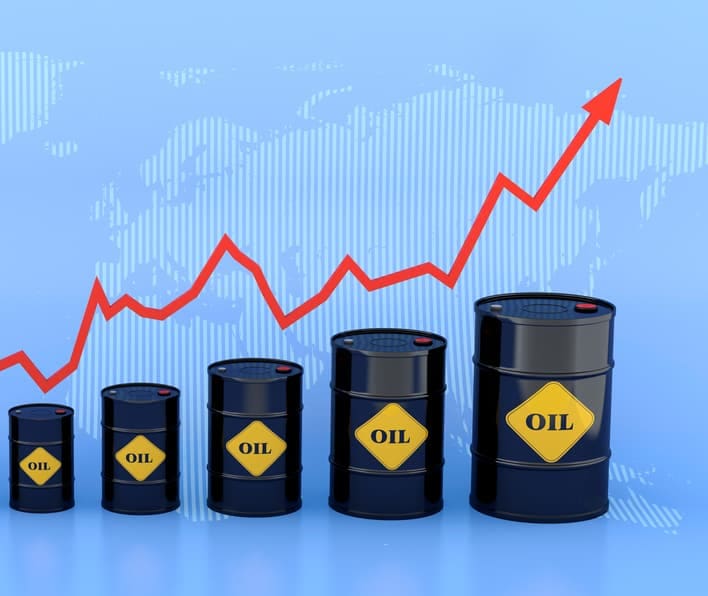
Crude oil prices have been rising for many months now, since bottoming in April of 2020 due to pandemic demand. But the current Russia – Ukraine tensions have elevated oil prices even higher as Brent Crude oil surpassed $95 per barrel last Wednesday. Russia is one of the world’s largest oil producers (see graph), and concerns that supply disruptions from the major producer in a tight global market could push oil prices higher. Oil price increases are thought to increase inflation and reduce economic growth. Oil prices directly affect the prices of goods made with petroleum products.
Core Prices Up Most Since 1982
Inflation data, hawkish Fed officials, and geopolitical tensions all weighed on equities last week. The consumer price index for January for all items rose 0.6%, driving up annual inflation by 7.5%. This price increase was the highest since February 1982, according to cnbc.com. Core prices, which exclude food and energy, rose 6%, the most also since 1982. In February, inflation worries were reflected in the University of Michigan’s preliminary gauge of consumer sentiment. The reading came in well below expectations, reaching the lowest level since towards the end of 2011.
Volatility Driven by Mega Cap Earnings

We could see further volatility this week as more companies report earnings. Notable companies such as Pfizer, Disney, Coca-Cola, Twitter, and Uber will be reporting earnings. Much attention will be given to Thursday’s Consumer Price Index (CPI) numbers, indicating whether the pace of inflation eased in January or not. The expectation is that inflation has slowed slightly from the previous month of December.
Earnings from Tech Giants

This week brings earnings from some of the largest technology firms. Companies such as Amazon, Alphabet, PayPal, Snap, and Meta Platforms are expected to report earnings. On the economic front, it’s all about the labor market. On Wednesday, we will get a gauge on the labor market with ADP releasing its National Employment Report showing the number of private jobs added in January. The Labor Department will release its nonfarm payrolls report for January on Friday.